
The Gender Pay Gap: What the Data Really Shows
Understanding the Gender Pay Gap
The gender pay gap represents the difference in average earnings between men and women across occupations. While progress has been made in recent years, data still shows that men often earn more than women in similar professions — even in developed economies.
Key Insights from the Data
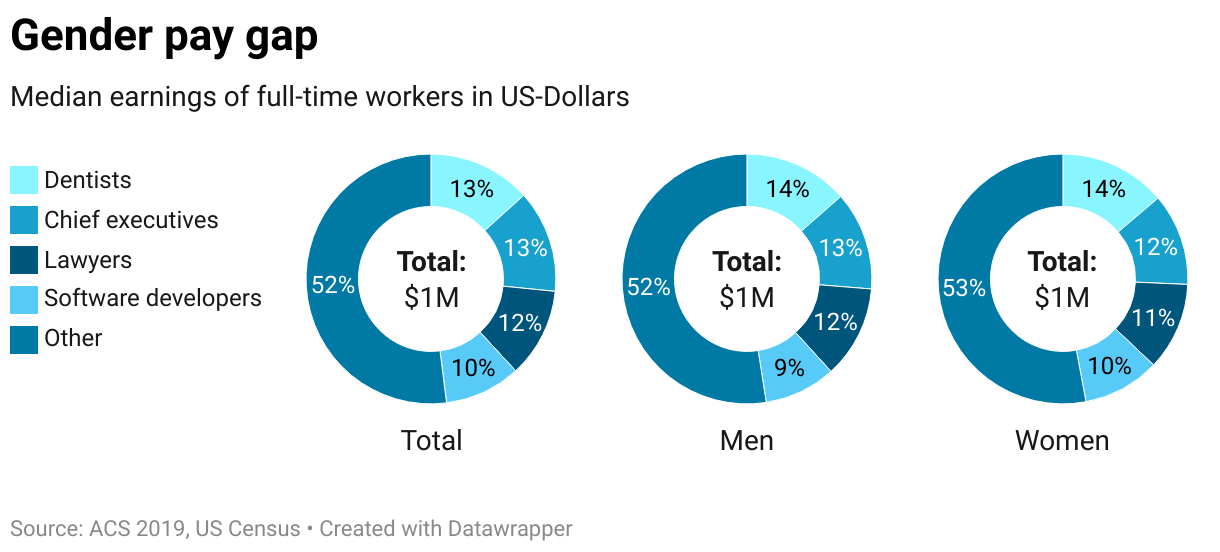
Based on the visualization below, which summarizes median earnings of full-time U.S. workers, we see that:
- Chief Executives and Lawyers have some of the largest pay gaps, with men earning notably more on average.
- Dentists and Software Developers show relatively smaller gaps but still reflect income disparities.
- The “Other” category, which includes a range of professions, highlights that gender imbalance persists across sectors, not just high-income roles.
Data Source: ACS 2019, U.S. Census
Why It Matters
The gender pay gap isn’t just a number — it reflects broader issues around equality, opportunity, and representation in leadership roles. Understanding these differences helps policymakers and organizations target solutions, such as transparent pay policies and improved workplace diversity programs.
Visualization: Gender Pay Gap by Occupation
Explore the interactive chart below to compare male and female median earnings:
Closing Thoughts
Bridging the gender pay gap requires continuous effort from fair hiring and pay practices to encouraging women’s participation in high-paying industries. Transparent data like this allows everyone to see where we stand and where we need to go next.




That’s a solid analysis – visualizing data is key! Tools like Google Veo 3.1 are changing how quickly we can turn ideas into compelling visuals, accessible on any device. It’s amazing how streamlined content creation has become!